
Quantum migration delays expose encrypted data
IBM and NUS warn harvest-now threats are outpacing corporate quantum readiness and cybersecurity upgrades.
Singapore’s S$37 billion Research Innovation and Enterprise 2030 programme is intensifying pressure on companies to prepare for quantum computing threats as cybersecurity vulnerabilities and talent shortages widen across industries.
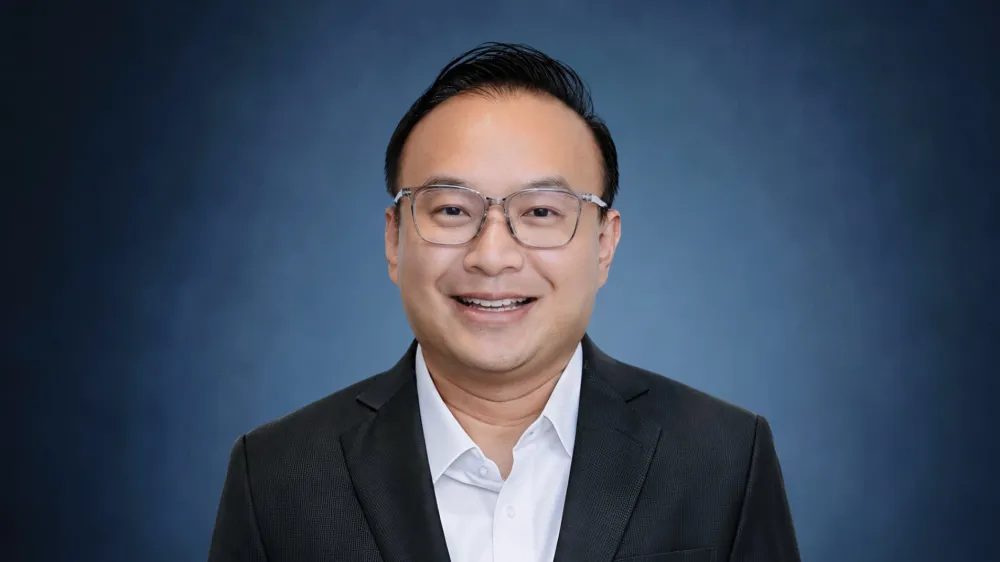
According to Julian Tan, Business Development Executive at IBM Quantum, and José Ignacio Latorre, Provost’s Chair Professor in the Department of Physics at the National University of Singapore, many organisations are still treating quantum readiness as a future issue despite rapid advances in hardware and software capabilities.
“The readiness gap is related to two issues,” Latorre said. “The very first is the availability of quantum computers, and the second is how we use these quantum computers.”
Latorre warned the gap is shrinking “at a speed that was not foreseen,” increasing pressure on businesses to modernise systems faster than originally expected.
The biggest concern now centres on cybersecurity. Both speakers highlighted growing “harvest-now, decrypt-later” risks, where encrypted information is collected today with the intention of decrypting it once quantum computers become powerful enough to break current encryption standards.
“If we produce a quantum computer, we already have the algorithm,” Latorre said. “Whoever has a quantum computer will be able to break the communications of the rest of the planet.”
According to Latorre, RSA-based cryptography developed in the 1970s can no longer be treated as permanently secure because quantum systems could eventually factorise encryption keys far faster than classical computers.
Tan said the threat extends beyond banking into government communications, healthcare records, transport systems, satellites, energy infrastructure, and intellectual property.
“The IBM Quantum Readiness Index that we published in 2025 found that 90% of quantum-ready enterprises are reporting inadequate skills as a key challenge,” Tan said.
He added that more than half of quantum jobs remain unfilled as companies compete for specialists in algorithm design, engineering, integrations, and domain science.
The discussion also examined how businesses should approach implementation. Rather than replacing classical computing systems entirely, Tan said companies should adopt hybrid architectures combining CPUs, GPUs, and quantum processors.
According to Tan, early commercial applications are already emerging in materials discovery, molecule simulations, and financial modelling. He warned organisations delaying workforce preparation and post-quantum migration risk falling behind as quantum capabilities accelerate.







![[Singapore Business Review] Report on the Asian Business Channel](https://www.cmgassets.com/s3fs-public/styles/video_thumbnail/public/2026-10/full-show-thumbnail_1.png.webp?VersionId=bJbrT_JKOuMWBnf7YkmsWjOSWIXddSvY&itok=zWuxHRNG)













 Read Here
 Advertise
 Sign Up






Commentary
When scale arrives before proof: Singapore’s capital allocation question in Southeast Asia
Rethinking fleet ownership in a changing business landscape
Beyond the chips: The materials behind Singapore’s AI infrastructure
How homegrown brands are redefining premium in Asia
AI in hospitality: Where should Singapore’s F&B operators draw the line?
Do Singapore workplaces mistake silence for leadership?
AI as the new competitive advantage for Singapore’s small retailers
Singapore's next payments opportunity