
Singapore-ASEAN payments face stablecoin shift as regulation matures
BizPay links fiat transactions through stablecoin rails as firms seek faster cross-border settlement.
Stablecoins are gaining a larger role in regional business payments as clearer digital asset regulation gives traditional companies more confidence to use blockchain-based infrastructure.
Albert Wong, Senior Vice President at OSL and head of BizPay, said OSL launched BizPay to bring its Web3 infrastructure into traditional payments. OSL Group is a listed company in Hong Kong and operates one of Asia’s largest licensed Web3 exchanges.
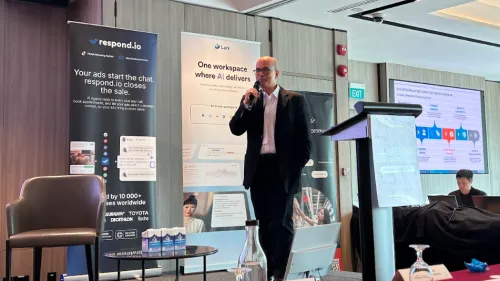
Demand for stablecoin-based payment rails is increasing as more suppliers want to receive stablecoins and more customers look for ways to send them across borders, Wong told Singapore Business Review on the sidelines of the South China Morning Post’s GBA ASEAN Summit 2026, held at Fullerton Ocean Park Hotel Hong Kong, 30 June.
Hong Kong’s stablecoin licensing regime is expected to support this shift. Wong said regulation is one of the key drivers of adoption because it gives businesses confidence that digital payment activity is being governed.
Still, regulatory differences across markets remain complex. Wong said OSL’s role is to help businesses manage compliance so that payments meet requirements in both the sending and receiving jurisdictions.
He said stablecoins could reduce friction in cross-border payments, which remain costly and slow under traditional channels. Between the Greater Bay Area and ASEAN, Wong expects adoption to increase as businesses seek faster and lower-cost settlement options.
BizPay is also offering what Wong described as a “sandwich” model, where businesses continue using fiat currency at both ends of a transaction. For example, a company may receive Indonesian rupiah and settle into a Hong Kong dollar bank account, whilst stablecoins move value in between.
Wong said this allows businesses to use the speed and cost benefits of stablecoins without changing the fiat interface they already use.
He added that central bank digital currencies and stablecoins are likely to coexist, with different instruments serving bank settlement, trade and business payment use cases.
For OSL, the test is whether regulation can turn stablecoins into a practical payment rail for traditional businesses across the Greater Bay Area and ASEAN.











![[Singapore Business Review] Report on the Asian Business Channel](https://www.cmgassets.com/s3fs-public/styles/video_thumbnail/public/2026-10/full-show-thumbnail_1.png.webp?VersionId=bJbrT_JKOuMWBnf7YkmsWjOSWIXddSvY&itok=zWuxHRNG)













 Read Here
 Advertise
 Sign Up







Commentary
When scale arrives before proof: Singapore’s capital allocation question in Southeast Asia
Rethinking fleet ownership in a changing business landscape
Beyond the chips: The materials behind Singapore’s AI infrastructure
How homegrown brands are redefining premium in Asia
AI in hospitality: Where should Singapore’s F&B operators draw the line?
Do Singapore workplaces mistake silence for leadership?
AI as the new competitive advantage for Singapore’s small retailers
Singapore's next payments opportunity