
Singapore firms deploy AI to counter shrinking margins
The government now expects GDP growth as low as 0-2% in 2025.
Singapore’s economy is under strain from U.S. tariffs, domestic slowdowns, and shrinking funding. Tech startup funding in 2024 fell to just $2.1 billion—a 56% plunge from 2023—while the Ministry of Trade and Industry slashed the country’s 2025 GDP growth forecast to a narrow 0.0% to 2.0%.
In this environment, companies are intensifying their use of enterprise AI, process automation, and cloud-based platforms to reduce costs, stretch workforce capacity, and maintain competitiveness.
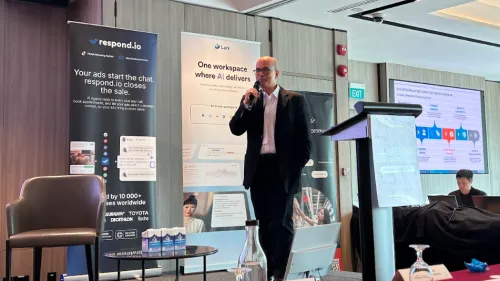
“What's ahead of us now is having industries in the right domains looking at this as a fantastic opportunity to pivot,” said Terry Smagh, Senior Vice President and General Manager, Asia Pacific and Japan, Infor. “Most importantly, also the optimisation measures that they can take to further their business.”
According to Infor’s How Possible Happens survey, 81% of Asia Pacific organisations agree that deploying technologies such as robotic process automation and process mining is key to increasing responsiveness and visibility—two traits crucial to navigating volatility.
“These are really faster to respond to turbulent markets, but most importantly, also provide a platform that can help you scale,” said Smagh.
He stressed that Singapore businesses must prioritise three core capabilities: building repeatable optimisation processes, ensuring platforms can scale globally, and embedding industry-specific tools that address actual bottlenecks.
“It’s not only just about lowering costs… but really spreading alternative technologies that's agile… to improve customer satisfaction,” he added.











![[Singapore Business Review] Report on the Asian Business Channel](https://www.cmgassets.com/s3fs-public/styles/video_thumbnail/public/2026-10/full-show-thumbnail_1.png.webp?VersionId=bJbrT_JKOuMWBnf7YkmsWjOSWIXddSvY&itok=zWuxHRNG)












 Read Here
 Advertise
 Sign Up







Commentary
When scale arrives before proof: Singapore’s capital allocation question in Southeast Asia
Rethinking fleet ownership in a changing business landscape
Beyond the chips: The materials behind Singapore’s AI infrastructure
How homegrown brands are redefining premium in Asia
AI in hospitality: Where should Singapore’s F&B operators draw the line?
Do Singapore workplaces mistake silence for leadership?
AI as the new competitive advantage for Singapore’s small retailers
Singapore's next payments opportunity