
Singapore's 16.9% medical inflation tests healthcare financing model
SGH and Cigna say co-payments and insurer collaboration are needed to keep Singapore's healthcare costs sustainable.
Singapore’s 16.9% medical inflation rate is intensifying debate over healthcare financing as higher private insurance costs risk pushing more patients into the public system.
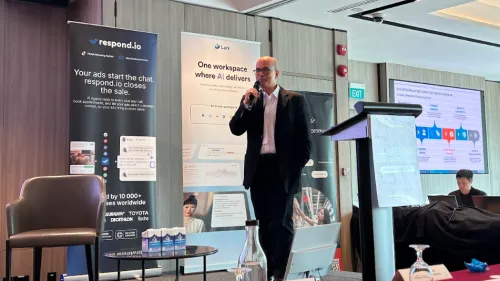
Tan Hiang Khoon, Chief Executive Officer of Singapore General Hospital, said healthcare spending cannot keep rising faster than national income. “Any healthcare expenses growth beyond a nation's GDP growth will clearly, at some point in time, reach an inflection point,” he said.
Dr Warren Ong, Head of Clinical at Cigna Healthcare APAC, said the financing model has to adjust to current healthcare needs. He said insurers, providers, employers and policymakers must share responsibility for cost sustainability and focus care on outcomes.
Further reform may involve stronger patient cost-sharing. Tan said zero co-payment does not support responsible consumption of healthcare services. “We feel that when everyone has a little bit at stake, it would encourage more reasonable consumption,” he said.
The challenge is finding a balance. If private healthcare becomes too expensive, more patients could shift into the public sector. Tan said the bigger burden would come if patients move from private hospitals into subsidised public care, rather than entering public hospitals as private patients.
The impact of April’s rider changes is still unclear. Ong said it is too early to confirm trends after only about two months, but insurers will watch whether Integrated Shield plan members start using public hospitals for private or subsidised care. Tan said public hospitals are already seeing more patients, though ageing also explains part of the increase.
Both interviewees said affordability cannot depend only on co-payments. Ong said insurers must work with providers on quality and value, rather than high-volume care. Tan said policy should allow people to choose service tiers based on affordability, whilst the health system continues to focus on suitable and efficient treatment.
AI and preventive care could help reduce pressure. Ong said new care models can support cost sustainability, whilst Tan said AI can improve “smart treatment, smart services, and smart operations.” He added that healthier lifestyles remain the best way to reduce future healthcare use.













![[Singapore Business Review] Report on the Asian Business Channel](https://www.cmgassets.com/s3fs-public/styles/video_thumbnail/public/2026-10/full-show-thumbnail_1.png.webp?VersionId=bJbrT_JKOuMWBnf7YkmsWjOSWIXddSvY&itok=zWuxHRNG)













 Read Here
 Advertise
 Sign Up







Commentary
When scale arrives before proof: Singapore’s capital allocation question in Southeast Asia
Rethinking fleet ownership in a changing business landscape
Beyond the chips: The materials behind Singapore’s AI infrastructure
How homegrown brands are redefining premium in Asia
AI in hospitality: Where should Singapore’s F&B operators draw the line?
Do Singapore workplaces mistake silence for leadership?
AI as the new competitive advantage for Singapore’s small retailers
Singapore's next payments opportunity