
Slow deal flow keeps Singapore property salaries flat
Singapore’s real estate professionals are earning less than their peers in Hong Kong.
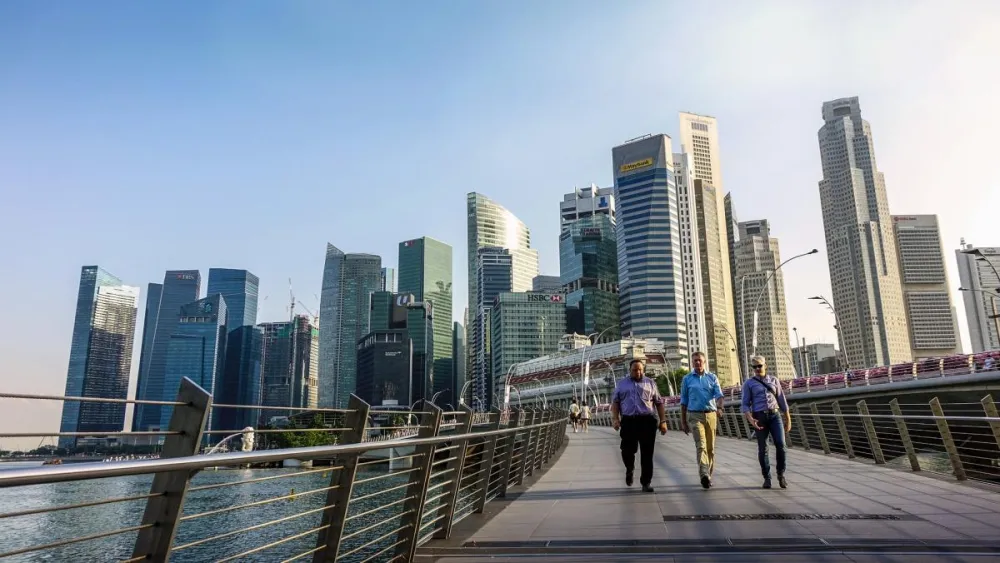
Singapore’s property professionals may be busy—but they aren’t getting richer. While the city-state remains a regional hub for real estate, salaries in the sector are trailing behind key peers, a trend driven by sluggish deal activity and macroeconomic headwinds.
According to Macdonald & Company’s 2025 Salary, Rewards and Sentiments report, the median annual pay in Singapore’s real estate sector is US$88,000—behind markets like Thailand and Hong Kong.
“Last year was certainly a very difficult capital raising environment,” said Will Buck, Managing Director, Asia Pacific at Macdonald & Company. “Less deal transactions, less volume of activity. That affects salaries in the region.”
Ongoing uncertainty—from inflation to interest rates to geopolitical risks—is keeping capital on the sidelines. “There’s a pricing disconnect between buyers and sellers. The less busy the markets are, the more salary growth stalls,” Buck said.
That stagnation comes at a cost. “It’s hard to attract and retain talent if wages don’t keep up with inflation and living costs,” he warned. “Professionals may leave for other markets if they can’t make a viable living here. Graduates and junior people coming into the industry might not be as attracted if wages are lower than other sectors,” Buck added.
Still, some areas are bucking the trend. “Data centers are a massive growth sector, and that’s driving salaries upwards,” Buck said. With a talent crunch in markets like Japan and Singapore, these pockets are seeing meaningful wage lifts.
But for the broader market, the path to better pay is clear. “It’s all about transactions and volume and activity,” Buck said. “When deals come back, salaries will follow.”











![[Singapore Business Review] Report on the Asian Business Channel](https://www.cmgassets.com/s3fs-public/styles/video_thumbnail/public/2026-10/full-show-thumbnail_1.png.webp?VersionId=bJbrT_JKOuMWBnf7YkmsWjOSWIXddSvY&itok=zWuxHRNG)













 Read Here
 Advertise
 Sign Up







Commentary
When scale arrives before proof: Singapore’s capital allocation question in Southeast Asia
Rethinking fleet ownership in a changing business landscape
Beyond the chips: The materials behind Singapore’s AI infrastructure
How homegrown brands are redefining premium in Asia
AI in hospitality: Where should Singapore’s F&B operators draw the line?
Do Singapore workplaces mistake silence for leadership?
AI as the new competitive advantage for Singapore’s small retailers
Singapore's next payments opportunity